Mountain Gorillas: Facts, Behavior & Where to See Them
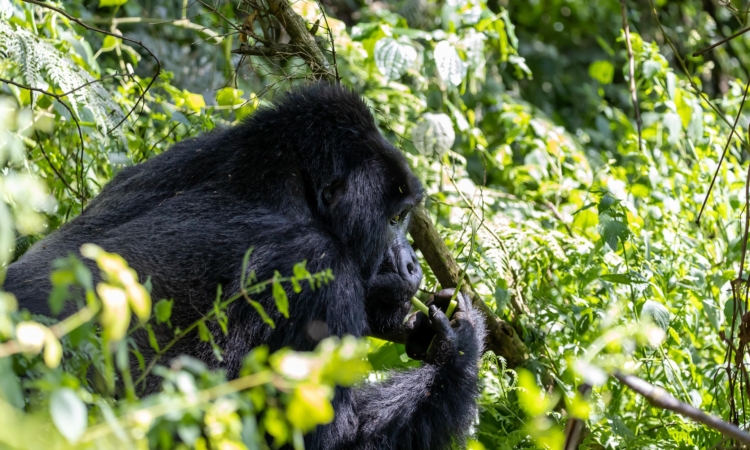
Mountain gorillas rank among the most fascinating animals you can see on an African safari. Scientifically named Gorilla beringei beringei, they are a subspecies of the eastern gorilla and appear on the IUCN Red List as endangered. Their population stood at around 1,000 in 2018, and today fewer than 1,063 remain worldwide.
Gorilla Hurly Burly arranges gorilla trekking safaris to see mountain gorillas in their natural habitat. Contact our team to check permit availability and plan your trip.
Where to See Mountain Gorillas in Uganda, Rwanda, and Congo
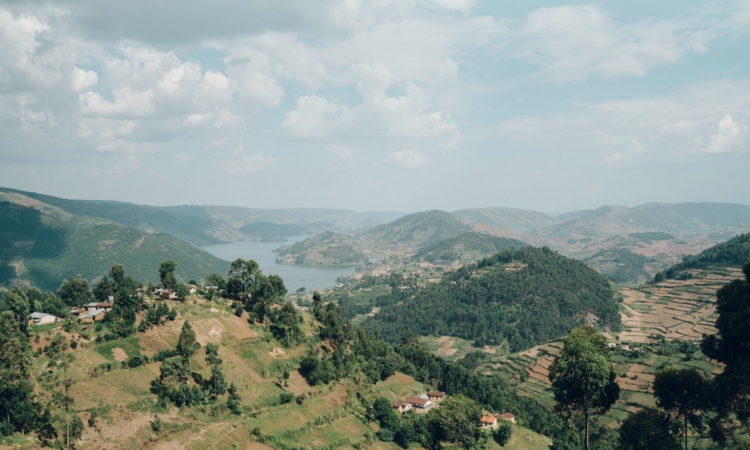
Mountain gorillas live only in the wild, never in zoos, and only in Africa, specifically in Uganda, Rwanda, and the Democratic Republic of Congo.
Researchers believe gorillas, like other apes, descended from monkeys in Africa and Arabia about 9 million years ago. Around 2 million years ago, eastern gorillas split from western gorillas. Today, eastern gorillas exist as two subspecies: the mountain gorilla and the eastern lowland gorilla.
In 2012, the Uganda Wildlife Authority estimated about 880 mountain gorillas, with roughly 400 in Bwindi Impenetrable Forest and the rest across the Virunga region, which includes Mgahinga Gorilla National Park, Virunga National Park, and Volcanoes National Park.
Discovery of Mountain Gorillas and Early Conservation Efforts
Mountain gorillas became known to the western world in 1902, when Captain von Berenge and his companions climbed Mount Sabyinyo in Rwanda and spotted a gorilla family. He shot two gorillas and recovered one, a five-year-old weighing 220 pounds. The remains traveled to Berlin, where scientists confirmed the species.
Before this discovery, many doubted gorillas could survive in cold, high-elevation areas outside West Africa. After the confirmation, more hunters arrived, including Prince Wilhelm of Sweden, who shot 14 gorillas during a 1920 to 1921 expedition. Belgium and England later launched gorilla conservation efforts in Congo and Uganda.
In Uganda, tourist visits to mountain gorillas only began after many years. Walter Baumgarten helped set up early visits from his Travelers Rest Hotel in Kisoro, which still serves travelers trekking gorillas in Mgahinga Gorilla National Park today.
Description of Mountain Gorillas
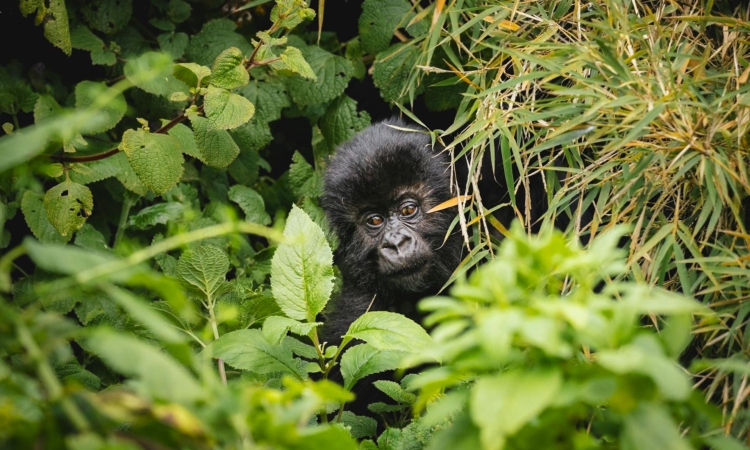
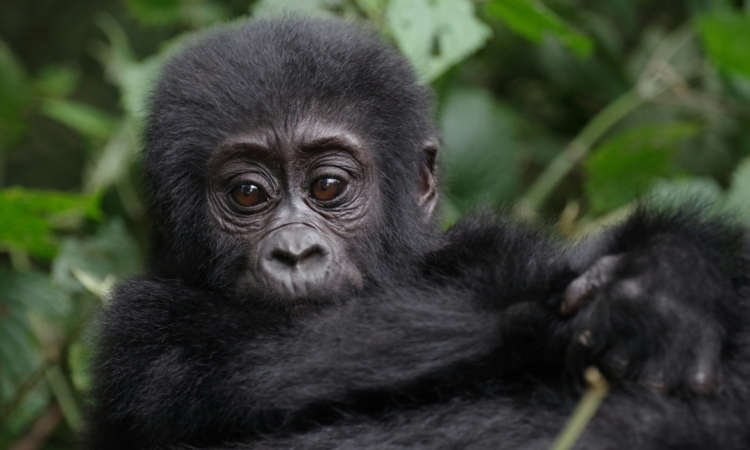
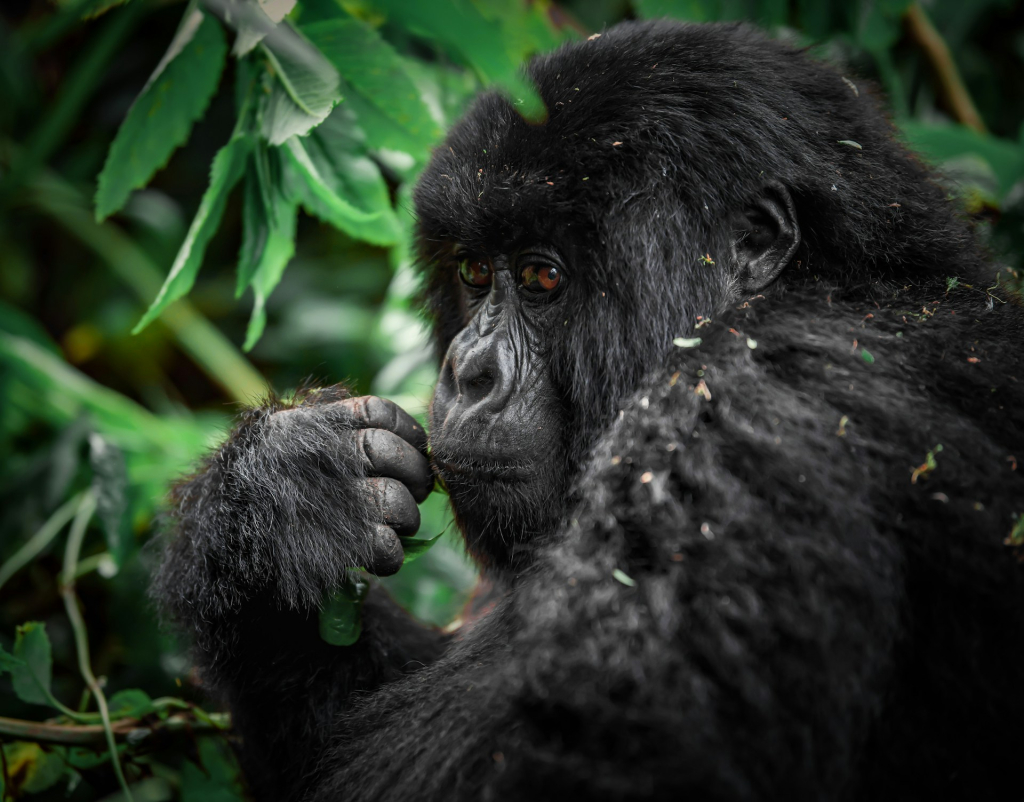
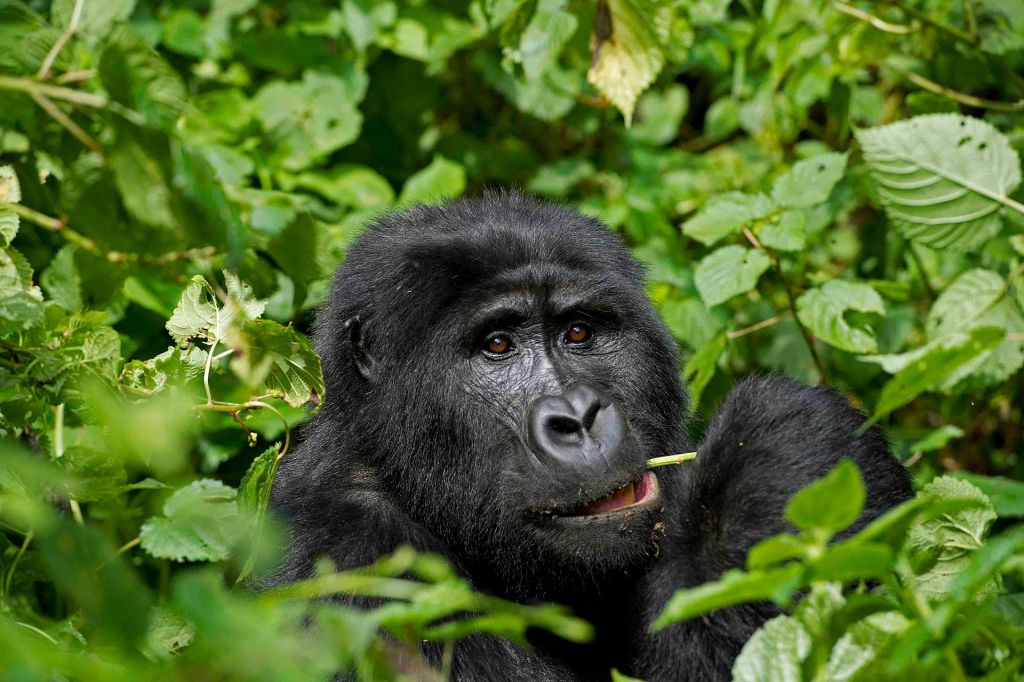
Mountain gorillas grow thicker, longer fur than other gorilla species, which helps them survive cold mountain temperatures. Each individual has a unique nose print, similar to a human fingerprint, which researchers use for identification.
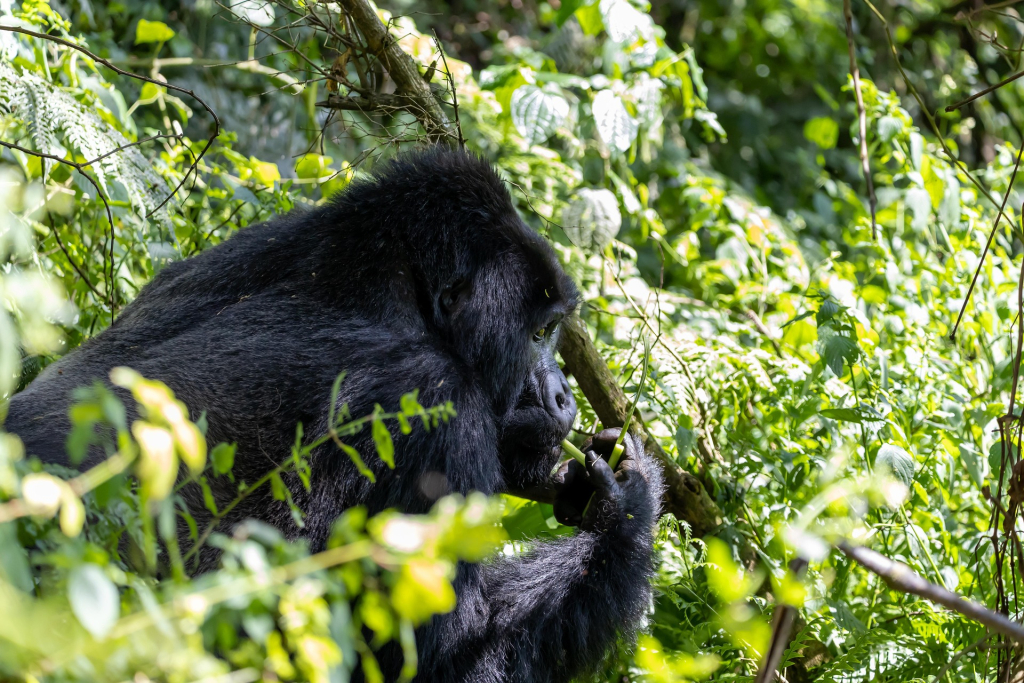
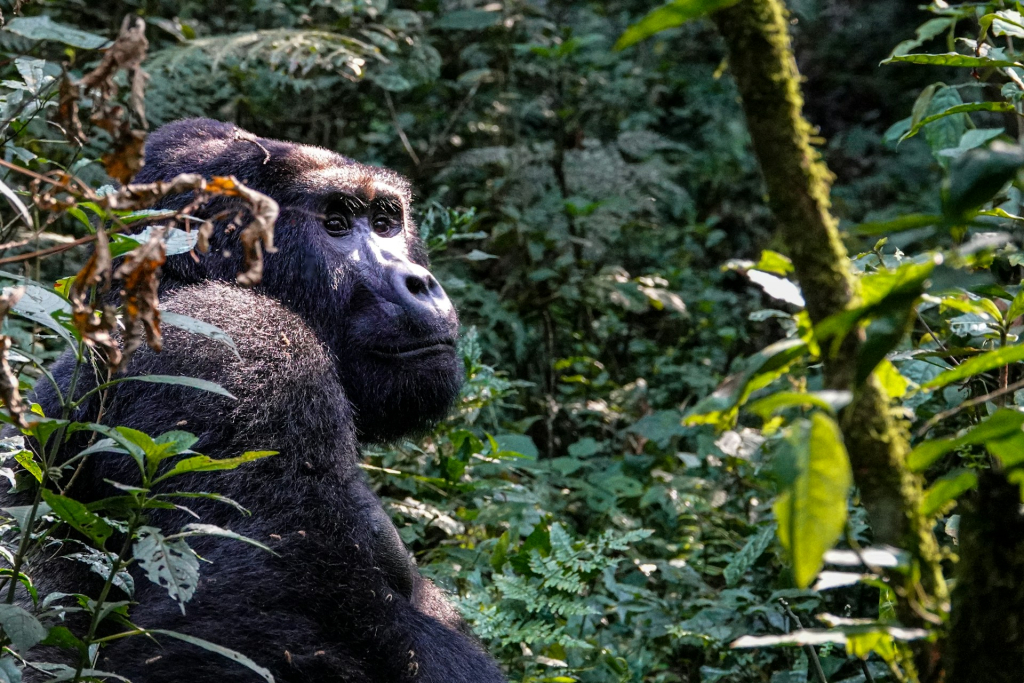
Male gorillas weigh about twice as much as females. An adult male, called a silverback because of the grey hair on his back, can weigh around 195 kg, while females weigh about 100 kg. Silverbacks stand taller than humans and are roughly four times stronger. Eastern lowland gorillas can grow even heavier, with the largest recorded lowland gorilla, found in Cameroon, weighing 267 kg.
Mountain gorillas have dark brown eyes, long arms, and shorter legs. They can stand and walk upright but usually move by knuckle-walking. They stay active during the day, spending most of their time eating leaves, stems, fruits, and occasionally insects.
Life Cycle of Mountain Gorillas
Female mountain gorillas reach sexual maturity between 7 and 8 years old but usually begin breeding a few years later. Males mature later, starting to breed around 15 years old. Gestation lasts about 8.5 months, similar to humans.
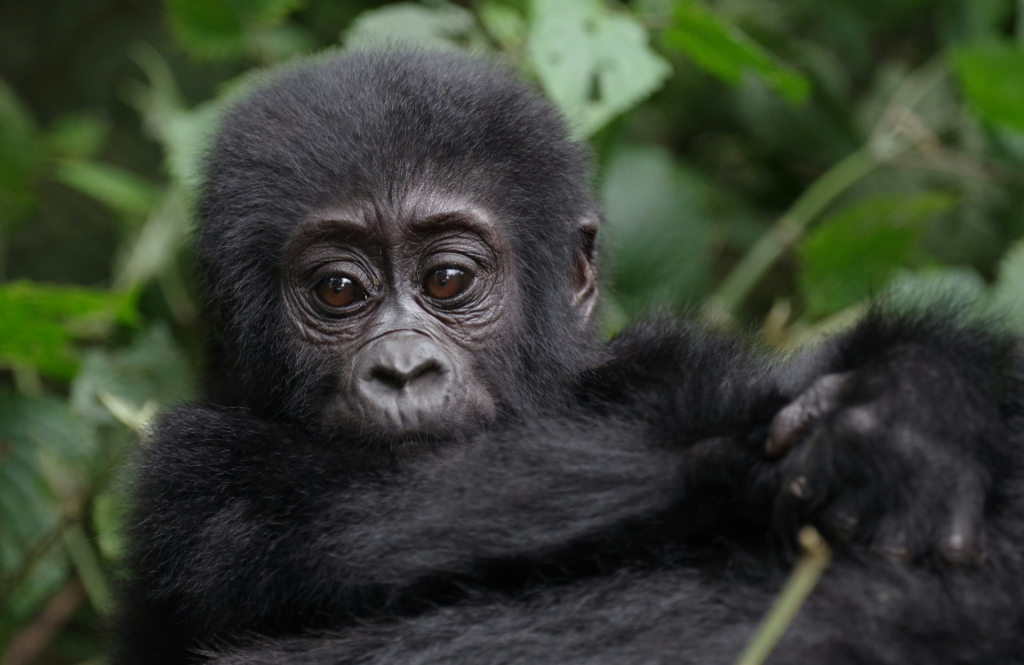
Gorillas usually give birth to one baby, since twins are rare. Mothers care closely for their young for 4 to 6 years, and females typically give birth to 3 to 4 babies over their lifetime. Mountain gorillas can live 40 to 50 years and live in groups called families or troops, each with 2 to 40 members led by a dominant silverback who decides where the group moves, feeds, and rests.
Mountain gorillas show aggression through vegetation throwing, chest beating, sideways running, hooting, slapping, and ground thumping. They communicate in about 25 different ways, including barks and grunts.
Role of Mountain Gorillas in the Ecosystem
Gorillas help maintain forest health by dispersing seeds as they move through their habitat. Their movements open up spaces for sunlight to reach new plants, and their waste enriches the soil, supporting further plant growth.
Gorillas contribute to forest biodiversity and help support clean air through healthy plant life. When a gorilla dies, its body also feeds insects and other scavengers, continuing its role in the ecosystem even after death.
Mountain gorillas live only in Africa’s equatorial forests, including Bwindi, Mgahinga, Volcanoes, and Virunga National Parks. Tourists can support gorilla conservation by booking a gorilla trekking tour, donating to conservation projects, and raising awareness about poaching and habitat destruction.
Gorilla trekking in Africa begins at 8:00 AM and takes 2 to 8 hours, including one hour observing the gorillas. Only eight visitors are allowed to trek each gorilla family per day to limit disturbance to the group.
Mountain Gorilla Reproduction and Mating
Mountain gorillas reproduce year-round. Females reach sexual maturity at 10 to 12 years and males at 11 to 13 years. Females have a menstrual cycle of 28 to 33 days and typically give birth every 2 to 5 years, usually at night. Newborns weigh 2 to 3 kg at birth.
Mothers care closely for their infants, who sit upright at 3 months, start walking at 6 months, and ride on their mothers’ backs for a period after that. By one year, infants move a few meters from their mothers, and by two years, they range farther while still returning regularly.
Mountain gorillas are polygamous, with the dominant silverback mating with all the females in the group. Females sometimes initiate mating through eye contact or by approaching the silverback directly. A male gorilla may father up to 20 offspring in his lifetime, while females typically have 3 to 6 babies. This slow reproduction rate is one factor behind the species’ endangered status.
Gorilla Trekking Locations and Permit Prices in Africa
Mountain gorillas live in Uganda, Rwanda, and the Democratic Republic of Congo, across four national parks: Bwindi, Mgahinga, Volcanoes, and Virunga. Gorilla groups usually have 5 to 30 members, including the dominant silverback, adult females, younger males, and infants.
Gorilla trekking ranks among Africa’s most expensive tourist activities, but it delivers a memorable close encounter with these animals. Visitors get 60 minutes to observe and photograph the gorillas once they find them. Permit prices vary by country: $400 in Congo, $800 in Uganda, and $1,500 in Rwanda.
Gorilla Hurly Burly arranges permits, transport, and accommodation for your mountain gorilla trekking safari in any of these three countries. Contact our team today to check availability and plan your trip.